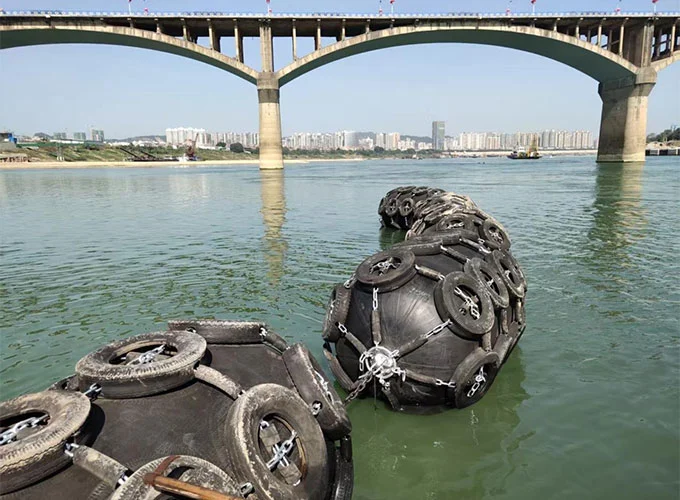
A rubber inflatable core mold is a flexible, pressure-resistant forming solution designed to create internal cavities, hollow structures, or controlled shapes where conventional rigid cores can be difficult to install and remove. Its performance depends on more than rubber flexibility. Material selection, reinforcement, dimensional accuracy, air-tightness, inflation pressure, curing quality, surface condition, and application-specific design all influence service reliability. This guide explains how rubber inflatable core molds work, where they are used, what problems buyers should avoid, and how to evaluate a suitable product for demanding construction and industrial applications.
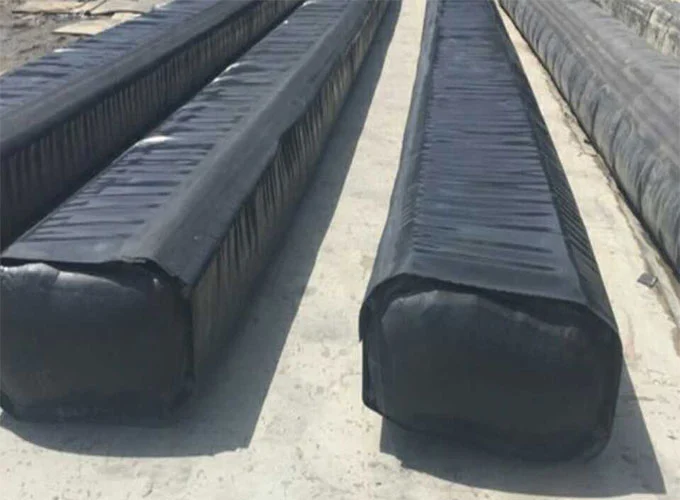
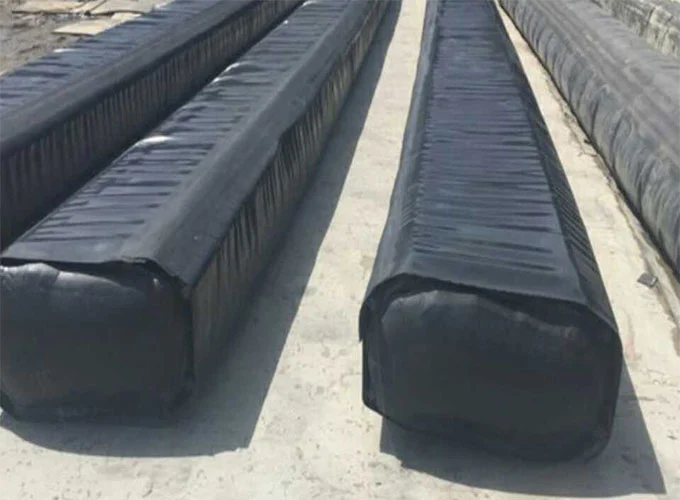
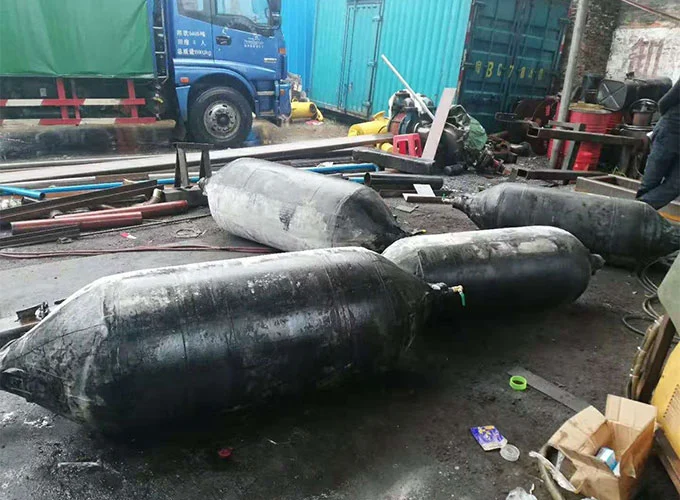
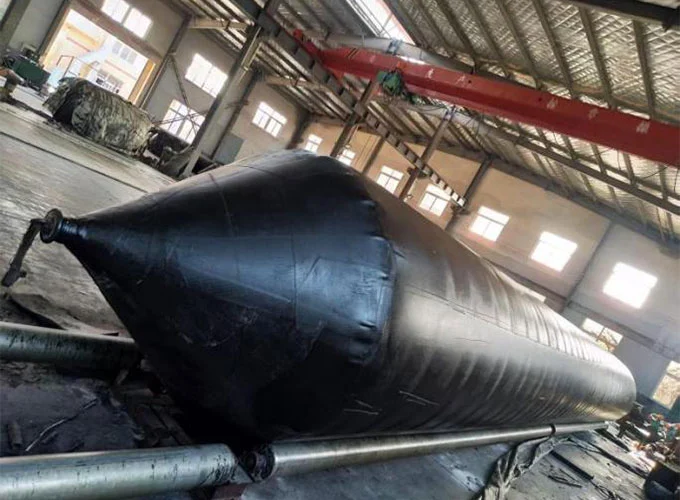
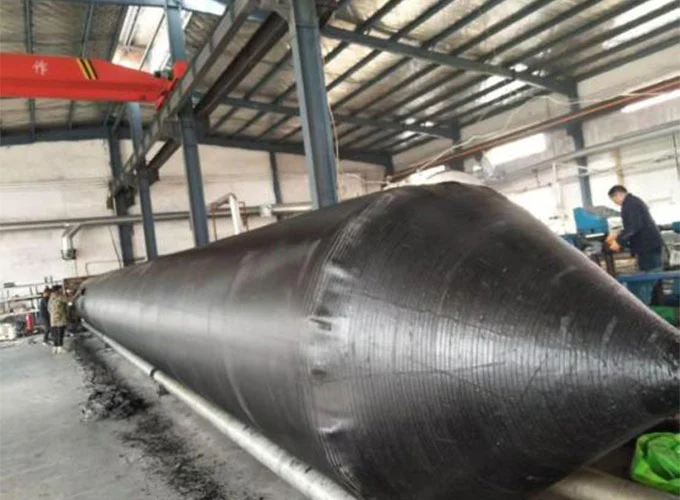
A rubber inflatable core mold is a flexible forming device that uses internal air pressure to expand into a predetermined shape. Unlike a conventional rigid core, it can be inserted into a confined space in a deflated condition and later expanded to provide the required supporting surface during forming or concrete placement.
In many construction applications, the structure is manufactured around the inflated core. Once the surrounding material has reached the required initial strength, the air can be released and the flexible core can be removed. This collapsible characteristic is one of the most practical advantages of an inflatable design.
Industrial inflatable cores may combine synthetic rubber with high-strength fabric reinforcement. The reinforcement provides structural support, while the rubber layers provide flexibility, air retention, protection and contact with the surrounding material. Qingdao Aorunda Rubber Industry Co., Ltd. describes its rubber inflatable core molds as pressure-resistant products using high-strength synthetic fiber fabric as a supporting skeleton and synthetic rubber as the protective and bonding layer.
Engineers often face a basic challenge when producing hollow concrete or composite structures: the core must provide stable internal geometry during forming, but it must also be removable afterward. A rigid core can provide dimensional stability, but extraction may become difficult when the finished structure has a narrow opening, long cavity or complex internal geometry.
An inflatable core approaches the problem differently. The core expands during use and collapses after deflation. This can simplify insertion and removal while reducing the need for complex disassembly.
| Project Challenge | Potential Benefit of an Inflatable Core |
|---|---|
| Limited installation space | Can be inserted in a deflated condition and expanded after positioning. |
| Difficult core removal | Deflation reduces the overall profile before extraction. |
| Long or hollow structures | Flexible construction can support continuous internal forming surfaces. |
| Repeated project use | Properly manufactured products can be cleaned, inspected and reused. |
| Customized internal geometry | Shape, dimensions and reinforcement can be engineered for the application. |
The important consideration is that flexibility should not come at the expense of dimensional stability. The core needs enough reinforcement and pressure control to maintain its intended geometry throughout the working cycle.
The operating principle is straightforward, but correct execution is important. The deflated core is first positioned inside the target structure. It is then inflated to the specified working pressure. Once stable, the surrounding material can be placed or formed around it.
For concrete construction, controlled inflation is especially important. Excessive pressure can place unnecessary stress on the core, while insufficient pressure may result in deformation or dimensional inconsistency. The appropriate pressure must therefore be determined according to the specific product design and project conditions rather than treated as a universal value.
The structure of a rubber inflatable core mold directly affects its ability to maintain shape and withstand repeated handling. A typical industrial design may consist of several functional layers rather than a single sheet of rubber.
Depending on the intended application, manufacturers may select different rubber compounds and reinforcement structures. Material compatibility should be considered alongside temperature, pressure, abrasion, environmental exposure and expected service cycles.
Manufacturing technology is equally important. Rubber inflatable structures can be produced through different forming and vulcanization approaches. In industrial products, controlled vulcanization can help establish the desired elasticity, bonding and mechanical characteristics. Engineering literature on inflatable mandrels also demonstrates the importance of reinforced elastomer layers, leak testing and controlled curing in reusable inflatable structures.
Buyers often focus on dimensions and price first, but the most important purchasing questions concern how the core will behave under actual operating conditions.
| Performance Factor | Why It Matters | What Buyers Should Confirm |
|---|---|---|
| Air-tightness | Pressure must remain stable during the working cycle. | Leak testing method and valve quality. |
| Dimensional stability | The inflated core must maintain the intended cavity geometry. | Finished dimensions and allowable tolerances. |
| Tear resistance | Protects against damage during handling and installation. | Rubber compound and reinforcement structure. |
| Pressure resistance | Prevents excessive deformation during operation. | Recommended working pressure and test standards. |
| Flexibility | Allows insertion and removal in confined spaces. | Deflated dimensions and bending characteristics. |
| Reusability | Affects long-term operating cost. | Expected service cycles and maintenance requirements. |
Rubber inflatable core molds are particularly useful when a project requires a hollow internal structure while maintaining a removable forming system. Their use can be found in construction and other applications involving flexible internal forming.
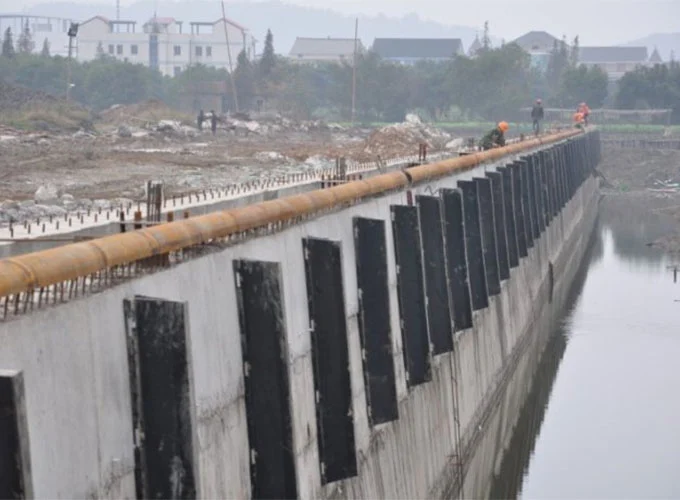
One important area is bridge and concrete construction. Inflatable core molds can be positioned inside structural sections before concrete placement, inflated to the required pressure and removed after the concrete has sufficiently set. Qingdao Aorunda Rubber Industry Co., Ltd. specifically identifies bridge engineering as an important application field for its rubber inflatable core molds.
Similar principles can be applied to culverts, hollow concrete components and customized structural forms where conventional rigid cores may be inconvenient to extract.
The final application determines the required geometry, reinforcement, pressure capability and material selection. For this reason, providing detailed project information to the manufacturer is often more useful than simply requesting a standard catalog size.
Choosing a suitable rubber inflatable core mold starts with understanding the complete working environment. A reliable purchasing specification should contain enough technical information for the manufacturer to evaluate the actual operating conditions.
Correct operation is essential even when the core itself is manufactured to a high standard. Before installation, remove stones, metal fragments, sharp edges and other objects that could puncture the rubber surface.
Position the mold carefully and ensure that the centerline corresponds with the intended cavity. During inflation, increase pressure gradually and observe the shape rather than relying only on the pressure gauge. An irregularly shaped core may require controlled, sequential inflation to achieve uniform expansion.
Once the target working pressure is reached, close and secure the valve. The mold should then be fixed in position before surrounding material is placed. During concrete pouring, balanced placement can help reduce unnecessary movement and localized loading.
After the surrounding material reaches the required initial setting condition, release the internal pressure slowly. Avoid dragging or forcing a partially inflated mold through a narrow opening because this can increase the risk of surface damage.
| Problem | Possible Cause | Practical Response |
|---|---|---|
| Pressure drops during use | Valve leakage, surface damage or connection problems. | Stop the process, inspect the valve and conduct a controlled leak test. |
| Uneven shape after inflation | Incorrect positioning, uneven inflation or unsuitable pressure. | Deflate, reposition and reinflate gradually while checking alignment. |
| Core is difficult to remove | Insufficient deflation, restricted opening or surrounding material interference. | Release air completely and check the extraction path before applying force. |
| Surface abrasion | Contact with sharp aggregate, metal edges or rough surfaces. | Clean the installation area and eliminate sharp contact points. |
| Short service life | Improper storage, repeated overpressure or rough handling. | Follow recommended pressure, cleaning and storage procedures. |
Many operational failures can be prevented before the core is used. A pre-installation inspection, controlled inflation procedure and post-use cleaning routine can significantly reduce avoidable damage.
A reusable rubber inflatable core mold should be treated as an engineered tool rather than a disposable accessory. After removal, wash away concrete residue and other contaminants before they harden on the rubber surface.
Once clean, inspect the entire surface for cuts, punctures, abrasion, abnormal swelling and bonding defects. Pay particular attention to valves, seams and connection areas because these locations may experience concentrated mechanical stress.
Proper maintenance is particularly important for contractors using customized core molds across multiple construction projects. Preventive inspection can identify problems before the next installation begins.
A customized rubber inflatable core mold requires more than rubber processing capability. The manufacturer needs to understand how dimensions, reinforcement, pressure, rubber properties and connection components interact under real operating conditions.
Qingdao Aorunda Rubber Industry Co., Ltd. specializes in rubber inflatable core molds, pipeline leak-sealing airbags and related rubber products. Its published product information describes the use of high-strength synthetic fiber fabric as the pressure-resistant reinforcement and synthetic rubber as the protective layer, with production involving high-temperature vulcanization.
For project-specific orders, a manufacturer should be able to discuss drawings, dimensions, pressure requirements, installation conditions, expected service cycles and inspection requirements before production. This technical communication helps reduce the risk of receiving a product that technically matches a dimension but does not perform well in the intended application.
Buyers should also ask for appropriate product documentation, inspection information and operating recommendations. Clear technical communication before production can be especially valuable when the mold has an unusual shape or must work under demanding construction conditions.
It is primarily used as a flexible internal forming core for creating hollow or controlled internal structures. It can be inflated during forming and deflated for easier removal afterward.
Yes. Customized length, diameter, shape, reinforcement, valve configuration and other construction details can be considered according to the application. A technical drawing is particularly helpful for non-standard designs.
A rigid core maintains a fixed shape and may require significant clearance or disassembly for removal. An inflatable core can collapse after deflation, which can simplify extraction from confined or narrow spaces.
Working pressure should be determined from the specific core design and application conditions. It should not be increased simply to obtain a harder or more rigid shape. The manufacturer's recommended operating range should be followed.
Many products are designed for repeated use, but actual service life depends on construction, operating conditions, handling, storage and maintenance. The product should be inspected after each use.
Useful information includes drawings, overall dimensions, cavity shape, required quantity, working pressure, surrounding material, operating temperature, installation method, extraction conditions and expected reuse frequency.
Inspect the entire surface, valve, fittings and connection points. Make sure there are no sharp objects underneath or around the core and confirm that the mold dimensions are suitable for the intended installation.
Common causes include valve leakage, punctures, cuts, damaged connections or deterioration around seams. A controlled leak inspection can help identify the source before the product is returned to service.
The right rubber inflatable core mold can make installation easier, simplify extraction and provide a practical solution for hollow and customized structures. For projects requiring specific dimensions, shapes, pressure requirements or reinforcement configurations, Qingdao Aorunda Rubber Industry Co., Ltd. can provide product solutions based on your application requirements.
Share your drawings, dimensions and working conditions with the technical team to discuss the appropriate core structure for your project. If you are looking for a customized rubber inflatable core mold for construction or industrial use, contact us to discuss your requirements and develop a suitable solution.
-
Phone: +86-532-87511707
Mobile: +86-13697683983
E-mail: anny@ardfenders.com
Address:No. 60, Kongquehe Fourth Road, Clothing Industrial Park, Jimo District, Qingdao City, Shandong Province, China
Copyright © 2026 Qingdao Aorunda Rubber Industry Co., Ltd. All rights reserved.