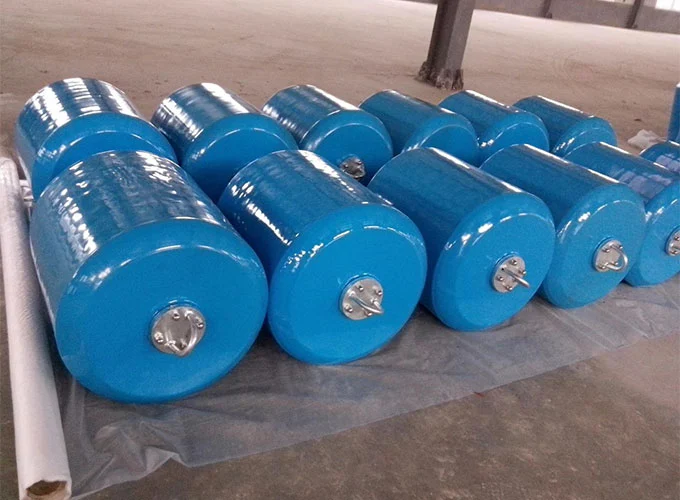
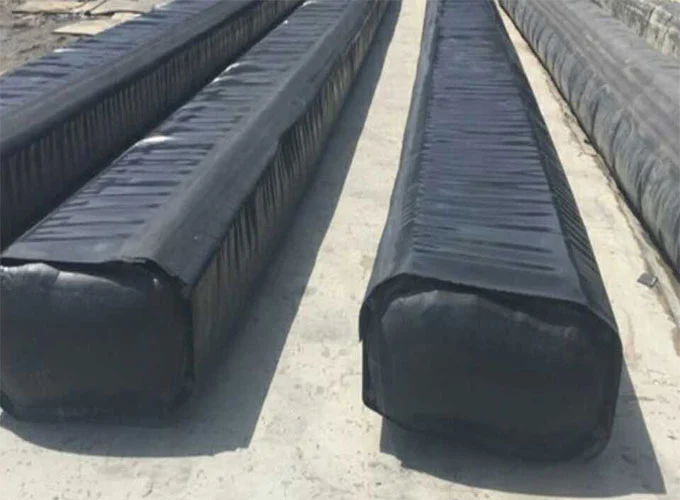
Why do submarine fenders use a hybrid gas-liquid structure instead of relying entirely on compressed air? The answer lies in the need to control buoyancy, underwater positioning, and impact energy during submarine berthing. By combining compressed air with seawater, a Submarine Anti-Collision Fender can maintain a vertical working position while providing adjustable cushioning performance. At Aorunda, we use this principle to develop specialized submarine fender systems with energy absorption capacities ranging from 50 to 2,000 kJ, supporting different berth conditions, water depths, and vessel requirements.
Submarine berthing presents a different protection challenge from conventional surface vessel docking. A large part of a submarine's hull remains below the waterline, and its underwater surface may include sensitive coatings and acoustic tiles. Conventional floating fenders are generally designed to protect the waterline area, so their contact position may not match the sections that require protection during submarine berthing.
At Aorunda, we use a hybrid gas-liquid structure to address this positioning and cushioning requirement. Instead of filling the entire internal chamber with air, our Submarine Anti-Collision Fender combines compressed air and seawater in a reinforced rubber body. A bottom counterweight helps maintain the vertical position, while the internal air-water ratio can be adjusted according to the required operating depth and berthing conditions.
The two media serve different but complementary functions. Compressed air provides a compressible volume that responds to external loading, while seawater contributes to the unit's mass, buoyancy balance, and submerged positioning. This combination makes the system more suitable for underwater contact than a conventional air-only floating fender.
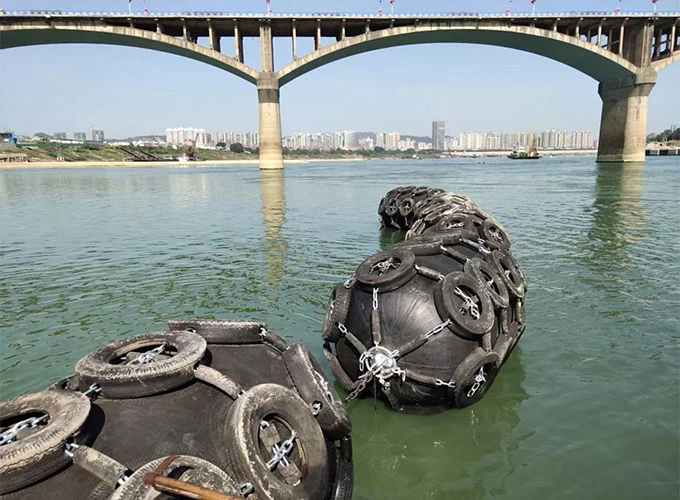
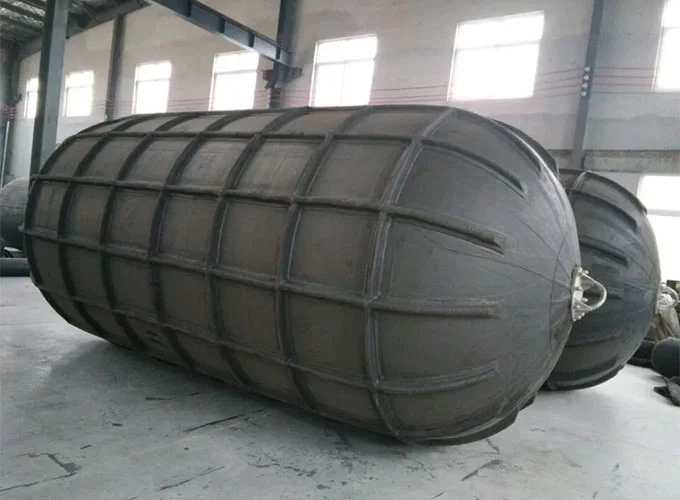
Our design is particularly relevant when the protection point must remain below the waterline. The multi-layer reinforced rubber body provides the contact surface, metal flanges connect the structural components, and the bottom ballast helps control the fender's orientation.
The working principle of a hydro-pneumatic fender is based on the interaction between compressed air, internal water volume, and the reinforced rubber body. When a submarine gradually approaches the fender, the rubber body deforms under contact pressure. The air chamber compresses, helping absorb impact energy and reduce the force transferred to the vessel's hull.
Water inside the chamber adds weight and influences the fender's floating equilibrium. It also affects the available air volume and the system's reaction characteristics. Therefore, changing the water-air ratio is not simply a matter of adding more filling material; it is an important part of matching the fender to the actual operating conditions.
For our Submarine Anti-Collision Fender, the specified energy absorption range is 50–2,000 kJ, depending on the selected configuration. The recommended berthing speed is no more than 0.5 m/s. These values should be considered together with vessel displacement, contact position, installation arrangement, and allowable hull pressure rather than used as independent selection criteria.
In practical projects, we recommend evaluating the required energy absorption and reaction force before confirming the fender dimensions and internal pressure. A larger fender does not automatically mean a better solution if its contact position or reaction characteristics do not match the berth.
One of the main advantages of a hybrid gas-liquid design is its adjustable internal configuration. Tidal changes can alter the relative position between the berth and the submarine's underwater hull. If the fender's internal configuration remains unchanged under all conditions, its working depth and cushioning characteristics may not always match the required contact position.
To address this issue, Aorunda provides adjustable air-water configurations. Our reference settings include:
| Operating Condition | Air Ratio | Seawater Ratio | Configuration Purpose |
|---|---|---|---|
| Standard Configuration | 30% | 70% | Regular underwater berthing conditions |
| High Tide | 40% | 60% | Adjusting the internal configuration for higher water levels |
| Low Tide | 20% | 80% | Adjusting the internal configuration for lower water levels |
These ratios are reference configurations rather than universal operating prescriptions. Actual adjustments should be determined by the fender's design, chamber volume, installation depth, and project-specific operating requirements.
For example, a berth with a relatively large tidal range may require different internal configurations between high and low tide. By adjusting the air and water volumes, the operator can adapt the system's submerged position and cushioning characteristics without changing the entire fender assembly.
We also specify a standard inflation pressure of 0.05–0.08 MPa, with 0.05 MPa recommended for the stated configuration. The maximum permitted pressure is below 0.1 MPa. Operators should follow the approved technical instructions and avoid adjusting pressure or filling ratios beyond the specified limits.
Selecting a submarine fender requires more than checking its external dimensions. Energy absorption, internal pressure, vertical alignment, temperature resistance, and the installation environment all influence its suitability.
The following table summarizes the main reference parameters of our Submarine Anti-Collision Fender:
| Technical Item | Aorunda Specification |
|---|---|
| Common Dimensions (Diameter × Length) | 2 m × 4 m, 2.5 m × 5.5 m, 3 m × 6 m |
| Customization | Available according to project requirements |
| Energy Absorption Capacity | 50–2,000 kJ |
| Standard Inflation Pressure | 0.05–0.08 MPa |
| Maximum Permitted Pressure | Below 0.1 MPa |
| Standard Air-Water Ratio | 30% Air + 70% Seawater |
| Allowable Inclination | ≤ ±2° |
| Recommended Berthing Speed | ≤ 0.5 m/s |
| Operating Temperature | -30°C to +70°C |
| Main Rubber Material | Marine-grade Neoprene Rubber |
| Reinforcement | Multi-layer Nylon Cord Winding |
| Bottom Ballast | Cast Iron or Concrete |
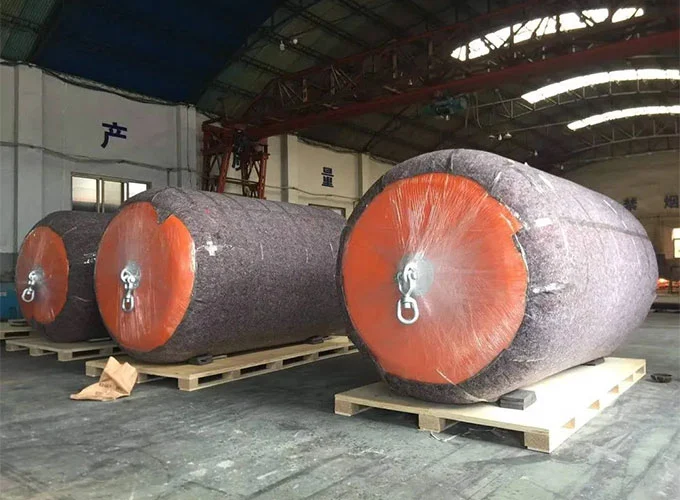
We manufacture the fender body using marine-grade neoprene rubber with multi-layer nylon cord reinforcement. This construction is designed to withstand repeated deformation and demanding marine exposure, including seawater, salt spray, oil, and ultraviolet radiation.
The standard dimensions provide a starting point for project evaluation. For customized orders, we consider the submarine's hull geometry, required contact height, water depth, berth structure, and expected berthing energy before confirming the final configuration.
A hybrid gas-liquid structure would not deliver the intended protection if the fender could not maintain its designed underwater position. Wind, waves, currents, and changing buoyancy can cause a poorly balanced fender to tilt or move away from its intended contact area.
This is why we incorporate a bottom counterweight into our Submarine Anti-Collision Fender. The ballast, available in cast iron or concrete, lowers the center of gravity and helps the fender remain vertically aligned in the water.
Aorunda specifies an allowable inclination of no more than ±2° under the stated operating configuration. Maintaining this alignment helps keep the intended contact surface in position and reduces the likelihood of uneven loading caused by excessive tilting.
During installation, we recommend preparing the steel support structure and anchor chains before lowering the fender into the water. A crane is used to position the unit vertically, with the counterweight facing downward. After connecting the anchor chains, operators should adjust their tension and verify that the fender hangs in the intended position.
The installation arrangement is just as important as the rubber body itself. Anchor points, support structures, water depth, and surrounding berth geometry should all be checked before commissioning.
Hybrid gas-liquid fenders are particularly useful in marine applications where the vessel's hull requires protection below the waterline. Their adjustable draft and vertical positioning make them different from conventional floating marine fenders.
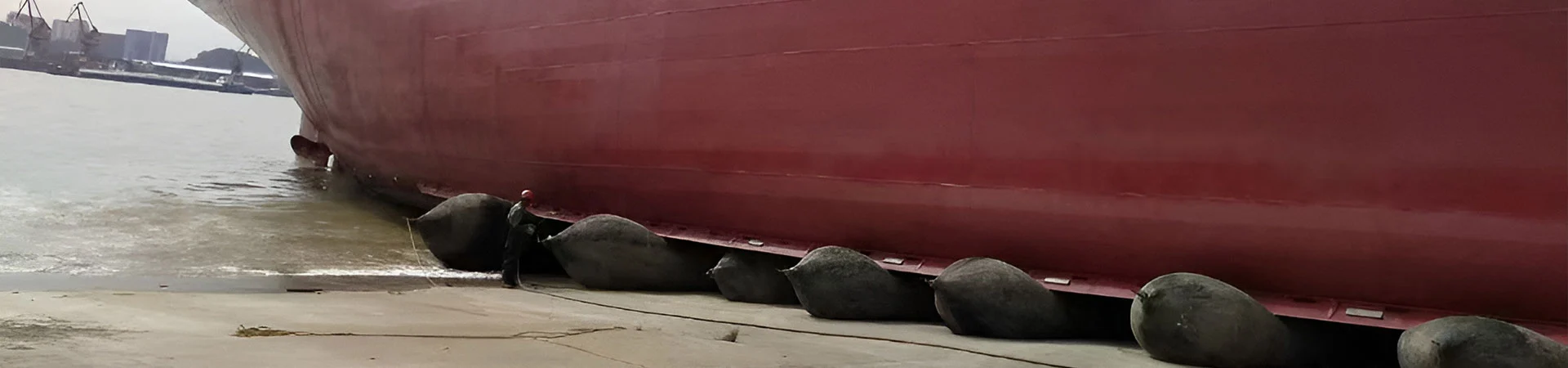
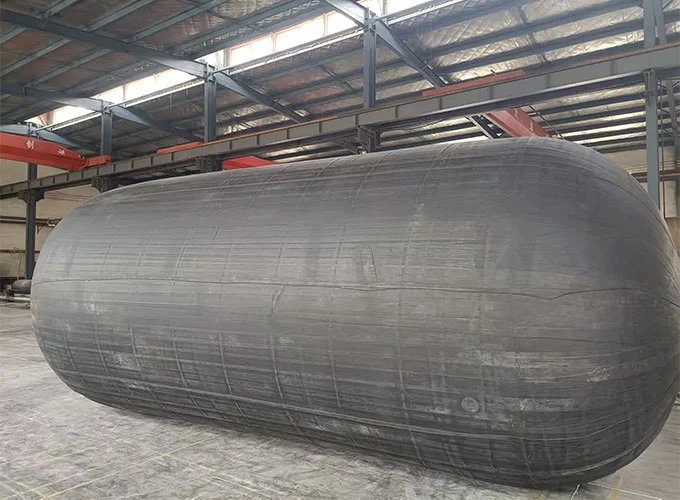
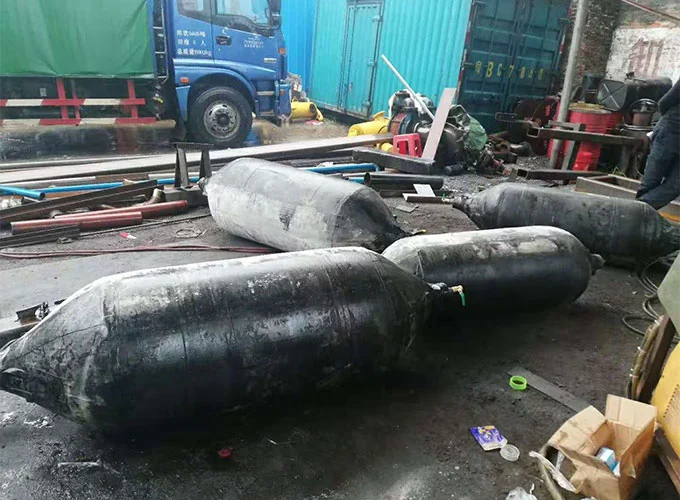
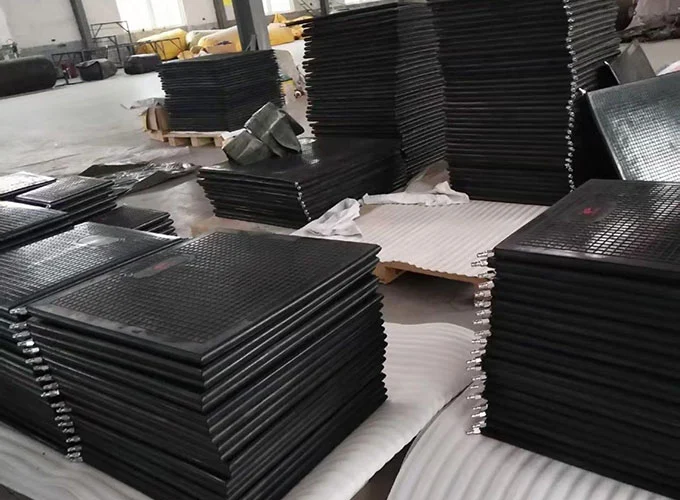
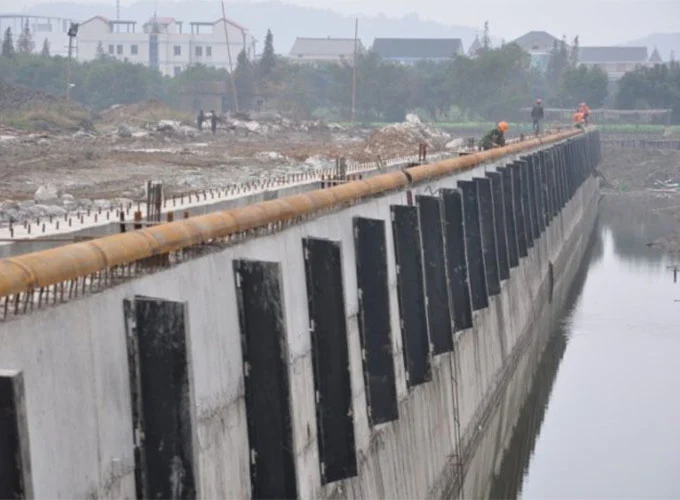
At Aorunda, we focus on rubber protection products for marine and industrial applications. In addition to our submarine fender range, we manufacture marine airbags, inflatable fenders, and solid rubber fenders.
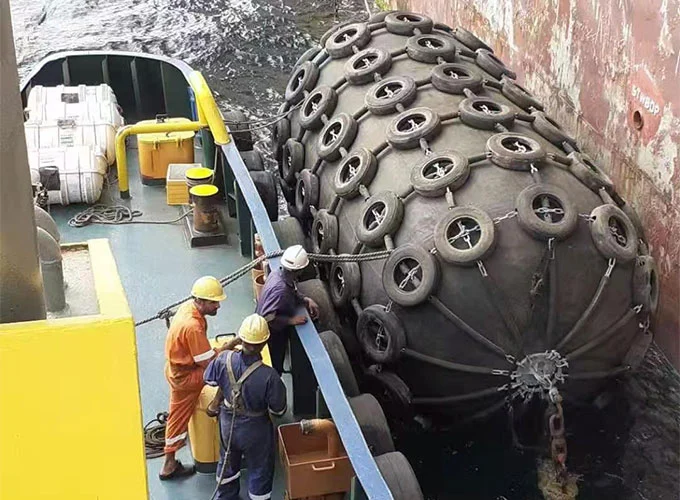
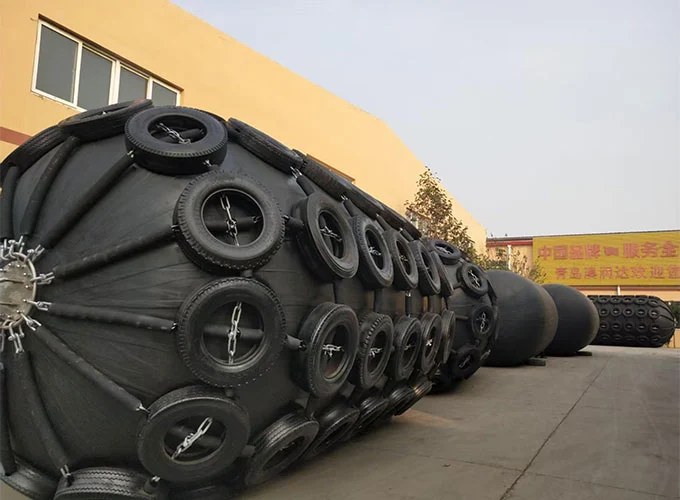
Each product serves a different operational purpose. A conventional inflatable fender is generally used for surface-level vessel protection, while a specialized hydro-pneumatic submarine fender is designed for controlled underwater contact. Selecting the correct type depends on the vessel, berth layout, and actual operating conditions.
Even a well-designed Submarine Anti-Collision Fender requires regular inspection. In our experience, maintenance should focus on pressure stability, rubber body condition, flange sealing, and the integrity of the anchoring system.
We recommend the following inspection practices:
| Inspection Item | Recommended Action | Purpose |
|---|---|---|
| Internal Air Pressure | Check periodically and replenish air when pressure falls below the specified operating range. | Maintain the intended cushioning configuration. |
| Rubber Body | Inspect for cuts, abrasion, aging, and surface damage. | Identify potential structural problems early. |
| Flanges and Seals | Check connections, gaskets, and signs of leakage. | Maintain chamber integrity. |
| Anchor Chains and Shackles | Inspect for corrosion, deformation, and connection wear. | Maintain installation stability. |
| Overall Alignment | Verify the vertical position and anchoring tension. | Keep the fender within its intended contact area. |
For more intensive maintenance, we recommend quarterly comprehensive pressure tests and annual professional flaw detection, together with regular cleaning of marine growth, salt deposits, and oil stains. Corroded anchor chains, damaged shackles, and aged sealing components should be replaced promptly.
When the fender is taken out of service for an extended period, the internal water should be drained and the internal pressure maintained at approximately 0.02 MPa according to the storage instructions. It should be kept in a cool, dry warehouse, away from direct sunlight, sharp objects, and heavy stacking loads.
Under appropriate operating and maintenance conditions, our stated design life is 15–20 years. Actual service life depends on berthing frequency, environmental exposure, installation quality, and inspection practices.
A conventional pneumatic fender primarily uses compressed air for cushioning and flotation. A hybrid gas-liquid or hydro-pneumatic fender contains both air and seawater, with a bottom counterweight to support vertical underwater positioning. This makes it more suitable for submarine berthing applications where contact below the waterline is required.
Yes. Aorunda provides reference configurations of 30% air and 70% seawater under standard conditions, 40% air and 60% seawater for high-tide adjustments, and 20% air and 80% seawater for low-tide adjustments. The final settings should follow the approved project configuration and operating instructions.
The specified energy absorption range is 50–2,000 kJ, depending on the selected model and configuration. Actual selection requires consideration of vessel displacement, berthing speed, contact geometry, and allowable reaction force.
Yes. We offer customized dimensions and adjustable internal air-water configurations. Common sizes include 2 m × 4 m, 2.5 m × 5.5 m, and 3 m × 6 m. For a project-specific design, we evaluate the water depth, tidal range, vessel hull dimensions, and required contact position.
The specified standard inflation pressure is 0.05–0.08 MPa, with 0.05 MPa recommended for the stated configuration. The maximum permitted pressure is below 0.1 MPa. Operators should monitor pressure regularly and follow the product-specific operating instructions.
Aorunda's stated design life is 15–20 years under appropriate operating and maintenance conditions. Actual service life varies with berthing frequency, rubber condition, pressure management, anchoring integrity, and the marine environment.
A hybrid gas-liquid structure is not simply an alternative filling method. It is a practical engineering approach to controlling underwater positioning, buoyancy, and impact cushioning during specialized berthing operations. The combination of adjustable air-water volume, reinforced marine rubber, and bottom ballast allows a Submarine Anti-Collision Fender to address protection requirements that conventional floating fenders may not adequately cover.
At Aorunda, we have been manufacturing rubber products since 1996. With two production bases, more than 30,000 m² of production facilities, professional rubber processing equipment, and advanced testing equipment, we support marine protection projects with product customization and technical assistance. Our company operates under an ISO 9001 quality management system and holds CCS certification.
If you are planning a submarine berth or upgrading an existing underwater protection system, share your berth depth, tidal range, vessel dimensions, and expected berthing conditions with our team. We can evaluate the appropriate fender dimensions, energy absorption capacity, and air-water configuration for your application.
Explore Aorunda Submarine Anti-Collision Fenders or contact our engineering team for product details and a project-specific quotation.
-
Phone: +86-532-87511707
Mobile: +86-13697683983
Email: anny@ardfenders.com
Address:No. 60, Kongquehe Fourth Road, Clothing Industrial Park, Jimo District, Qingdao City, Shandong Province, China
Copyright © 2026 Qingdao Aorunda Rubber Industry Co., Ltd. All rights reserved.