Follow Us:

Products
Marine Buoyancy Pontoon
  • Marine Buoyancy PontoonMarine Buoyancy Pontoon
  • Marine Buoyancy PontoonMarine Buoyancy Pontoon
  • Marine Buoyancy PontoonMarine Buoyancy Pontoon
  • Marine Buoyancy PontoonMarine Buoyancy Pontoon

Marine Buoyancy Pontoon

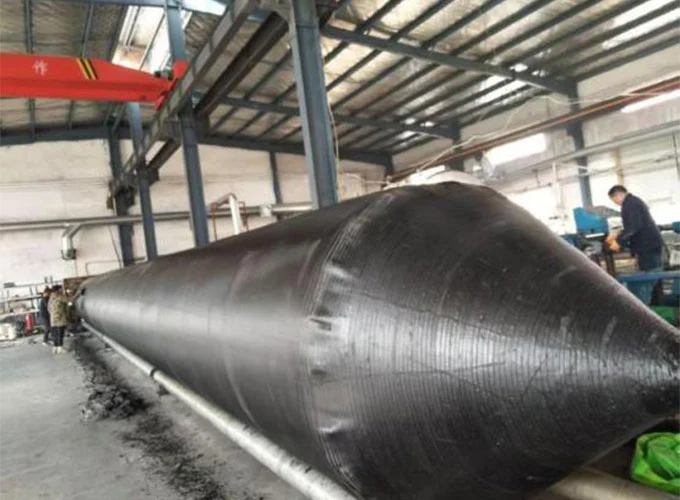
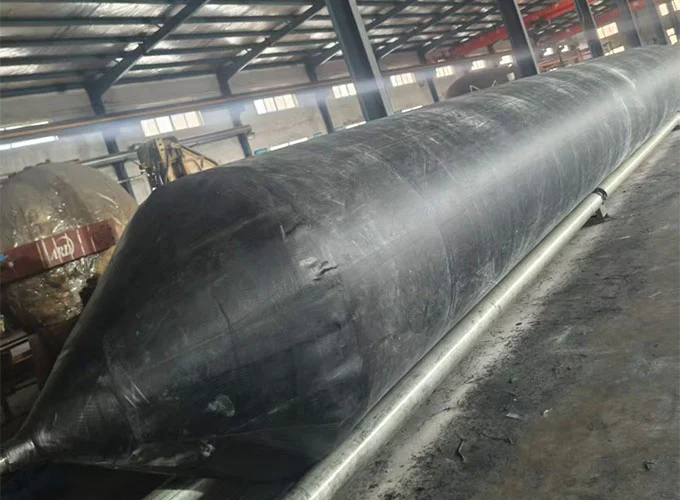
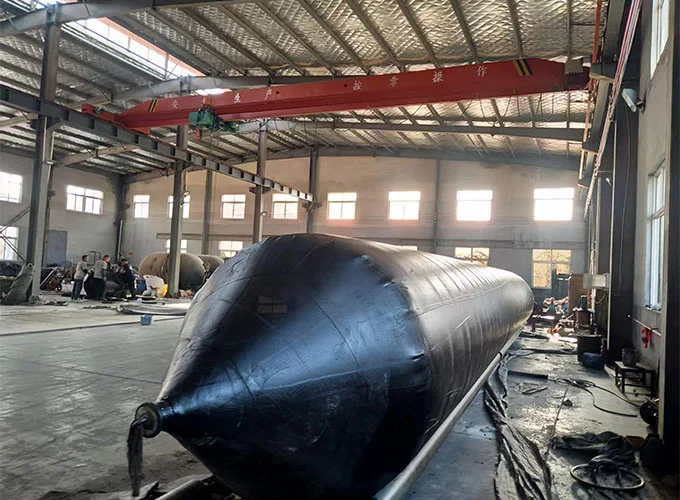
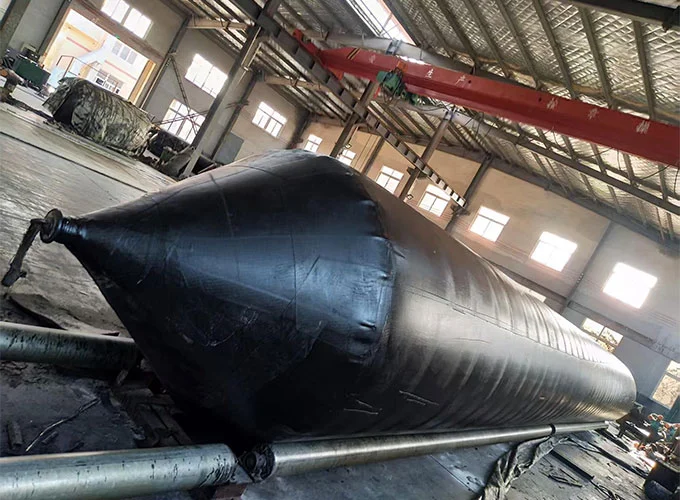
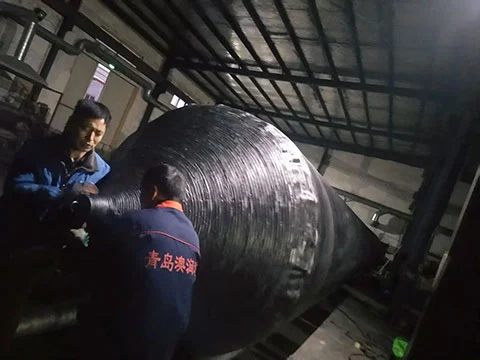
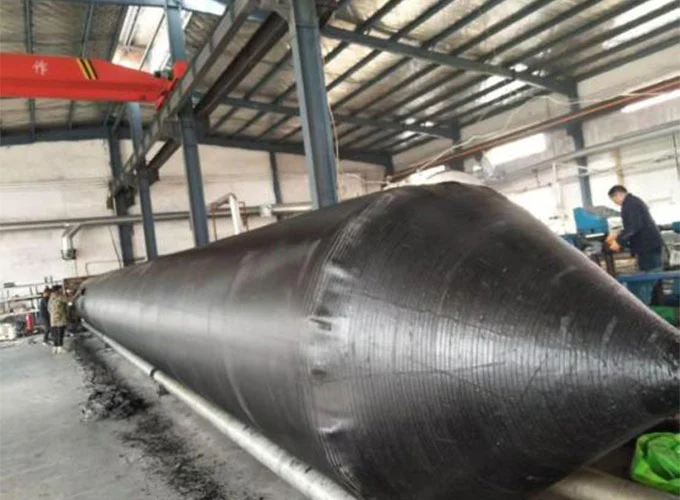
Qingdao Aorunda Rubber Industry Co., Ltd. is a factory specializing in the manufacturing, research, and production of high-strength rubber products. You can confidently purchase Marine Buoyancy Pontoons from us. Our products utilize natural rubber and styrene-butadiene rubber, and are manufactured using a complete winding molding process, resulting in high structural strength, safety, and durability.

Aorunda Rubber is a manufacturer and supplier of marine buoyancy pontoons from China. Our products have a rubber content of up to 64%-67%, and the internal reinforcement material is 1260D/2V1 nylon cord fabric with a single-strand breaking strength of no less than 210N. You don't have to worry about strength issues even when used in extreme environments.

What is a Marine Buoyancy Pontoon?

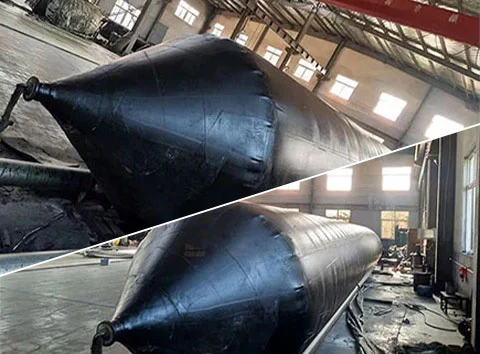
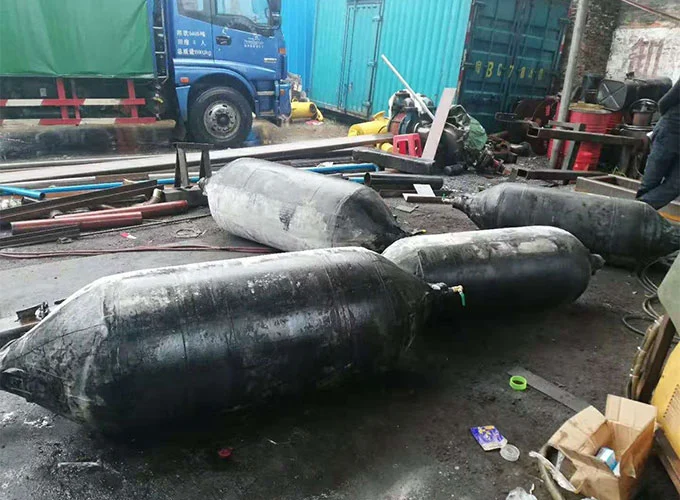
The marine buoyancy aid airbag is made of high-quality natural rubber (some of which are imported from Thailand RSS3) as the base material, and high-strength polyester and nylon curtain fabric as the reinforcement layer. It is formed by advanced overall winding and vulcanization technology, with no seams throughout the body, and the structure is denser and more cohesive. This structural characteristic gives it a high elastic modulus of 2-4MPa and excellent flexural resistance, with a flexural life of up to 200000 times without fracture failure.

Marine Buoyancy Pontoon

Application Scenarios

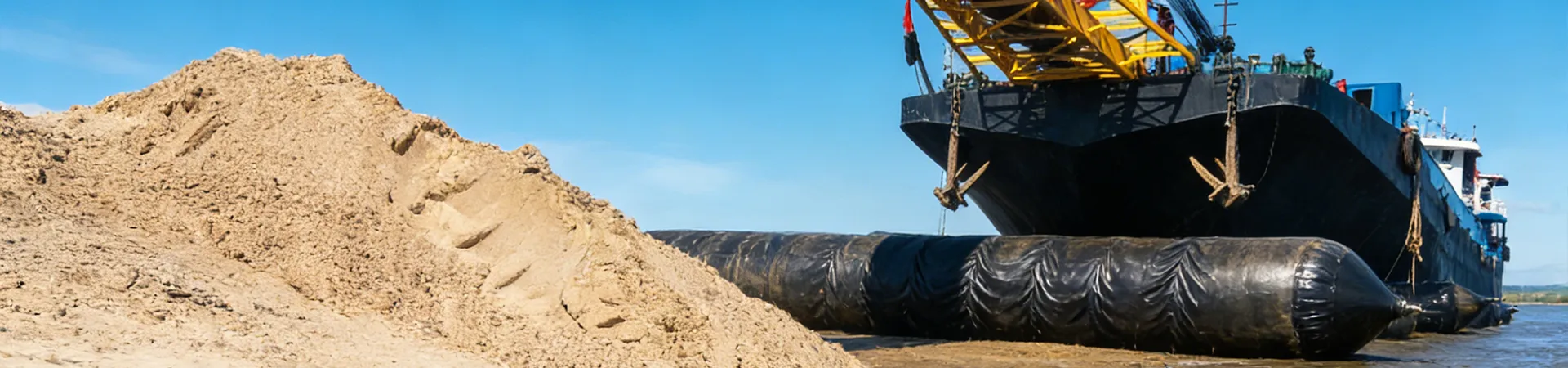
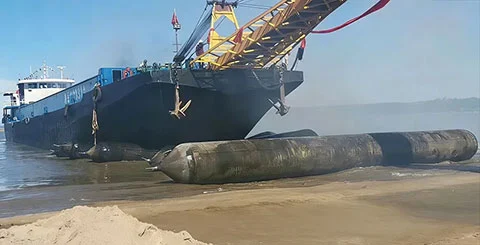
Ship loading and launching: No need for large mechanical equipment, low investment, quick results, has been widely recognized by the shipbuilding and port construction industries at home and abroad.

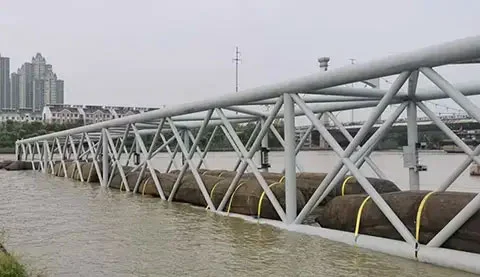
Heavy lifting and transportation: Marine Buoyancy Pontoon can be used for sinking boxes onto ships, handling other heavy objects, and assisting in underwater installation projects.

Assisted floating salvage: Widely used for rescuing stranded ships and assisting floating salvage in other rivers, seas, and lakes.

Environmental Applicability

The outer layer of the marine buoyant air bag has been specially treated, which has excellent acid and alkali resistance, oil resistance and anti-aging performance, and can remain stable even in the marine environment full of salt fog and oil pollution. It can operate normally within the extreme temperature range of -40℃ to 80℃ and can perform stably in both extreme cold and heat. In addition, Aorunda's products have a design lifespan of up to 10 years, with a smooth and wear-resistant appearance and low maintenance costs.

Marine Buoyancy Pontoon

Product Advantages

For our Marine Buoyancy Pontoon, its core capability is to carry tremendous weight. The marine airbags produced by Aorunda can safely carry weights ranging from tens of tons to tens of thousands of tons, easily handling heavy load operations such as ship launching and caisson transportation. The working pressure ranges from 0.2 MPa to 1.0 MPa, and the test pressure is as high as 1.3 MPa, far exceeding industry standards, ensuring safety and reliability even under extreme conditions.

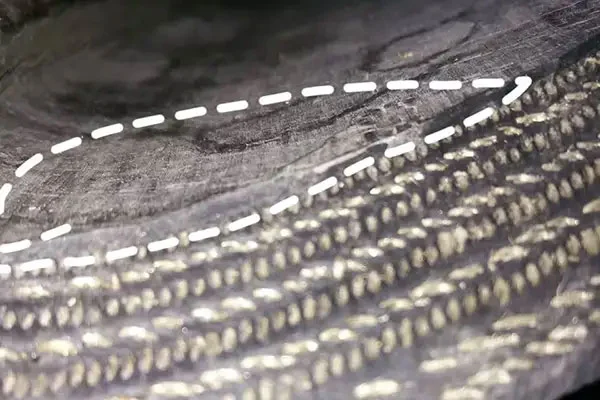
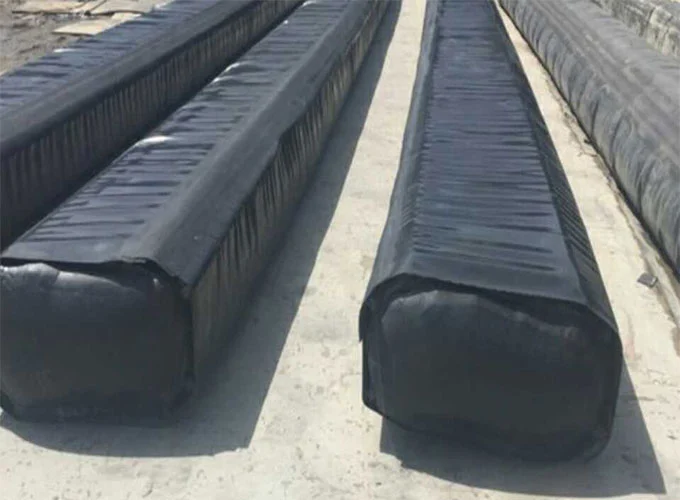
Airbags section: (9+1) layers

Marine Buoyancy Pontoon

Airbag Repair Methods

If the airbag is damaged, it can be repaired as long as the rubber is not severely aged (i.e., no cracks or stickiness on the surface), and the fabric is not loose or rotten.

The repair method is hot vulcanization, and the tools and repair materials are relatively simple, as follows:

Marine Buoyancy Pontoon
01

Clean the airbag, ensuring the inside and outside are clean and free of mud, oil, and water. Then dry the surface. Note that the soaking time during water cleaning should not exceed 10 minutes. After cleaning, immediately dry it in the sun or use a hairdryer to ensure all moisture is removed.

02

Clearly mark the repair area and outline the repair range. The marked area can be extended by 15mm. Do not miss any hidden damage.

03

Prepare the patch

The patch material is the same as the airbag, and the cord arrangement angle matches the airbag body.

The first layer of the patch is longitudinal, with a length of (wound length + 50mm) x 2 (the specific size depends on the size of the wound).

The second layer of the patch is diagonal, with the same angle as the airbag body, and 20mm larger than the first layer on all sides.

The third layer of the patch is also diagonal, with an angle opposite to the second layer, and 20mm larger than the second layer on all sides.

Layers four to six follow the same pattern. Each layer of the patch requires rounded corners with a radius of 40-50mm.

When the wound is a nail hole within 100mm or a scar of 50-70mm, a "+" shaped patch should be prepared. The nylon "+" shaped patch is made by bonding two layers of rubberized nylon fabric at a 90° angle. The specification is 200x200mm. Other aspects are the same as the regular patch.

04

Grinding the wound.

Use a steel file or a rotary file grinder to grind the wound. The surface texture should be fine and uniform, without loose rubber. The grinding depth should be 0.5-1mm, and the area should be 20mm larger than the patch. After grinding, the fabric should not show any breakage or loose threads. After grinding, use a brush and compressed air to clean off the rubber dust.

05

Applying the adhesive and drying.

The entire process must be kept clean. The first coat is a thin adhesive solution (adhesive: gasoline ratio of 1:8). The adhesive solution should be prepared in advance, without precipitation or lumps, and should be uniform. When applying the adhesive, force the adhesive paste into the grooves and fabric layers of the tire, ensuring even application without any noticeable overlapping.

06

Adhesion

First, brush a layer of primer 1±0.2 mm thick around the wound. Apply and press the adhesive as you go, avoiding excessive tension to prevent shrinkage and detachment after repair. Then, apply the patch, aligning its center with the center of the wound. The angle of the patch should match the curvature of the tire carcass.

For cracks larger than 1 meter, apply a layer of rubberized fabric over the wound, extending 25 mm beyond the wound edges. Then, apply the patch, and finally, apply a 20 mm wide, 0.8-1 mm thick sealing adhesive strip across the edge of the patch where it meets the tire carcass.

07

Vulcanization

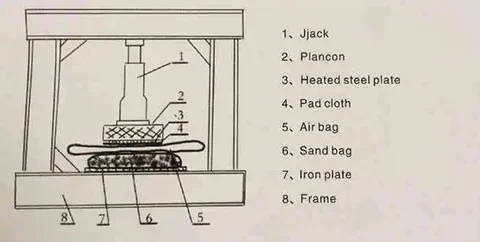
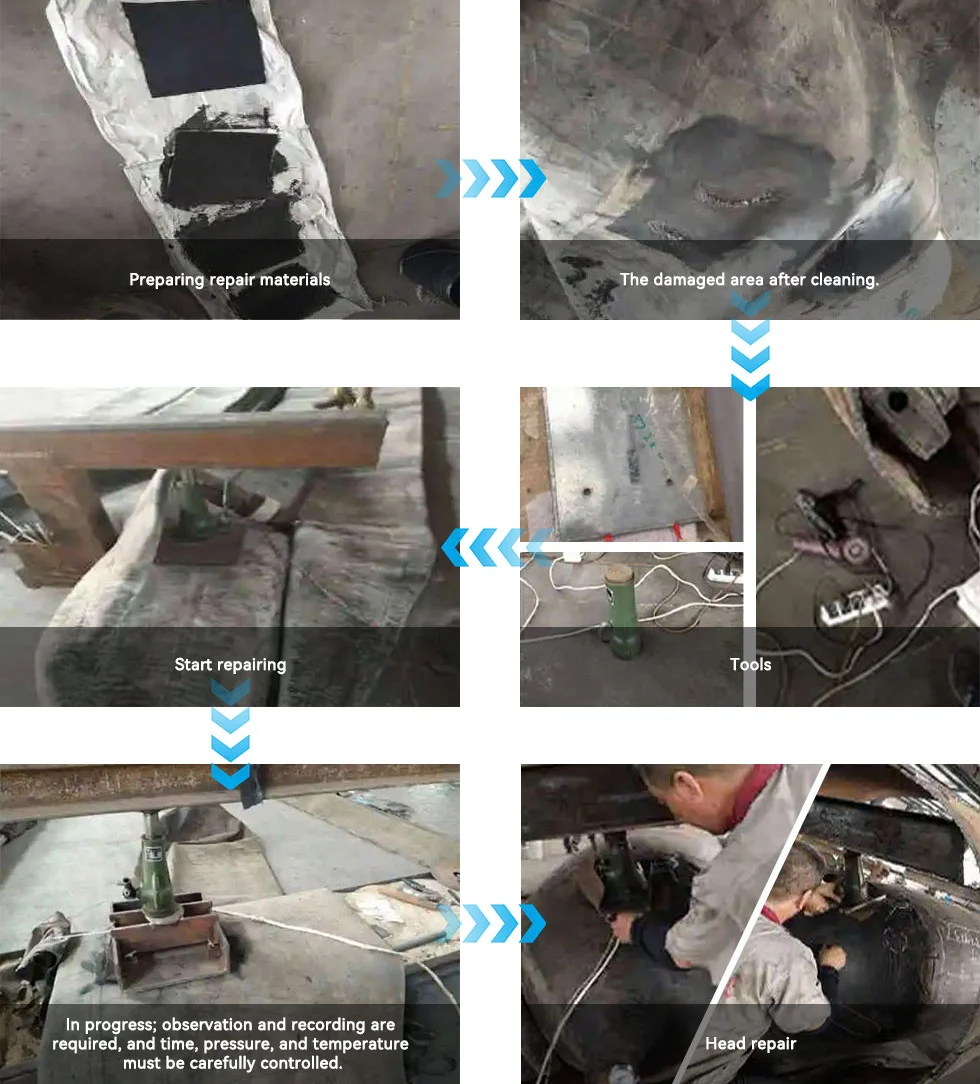
The following simple method can be used: construct a frame (as shown in the diagram), and equip it with a base plate, sandbags (made from discarded car inner tubes filled with sand), a jack, and a heating plate (a φ30 mm circular plate made of cast iron or steel, 25 mm thick).

Position the repaired air bladder as shown in the diagram, aligning the center. First, vulcanize the hole, then the scar. If vulcanizing a large wound exceeding the effective length of the heating plate, vulcanize the center first, then vulcanize outwards to both sides. When vulcanizing again, the heating plate should overlap the previous area by 15 mm. Vulcanization time starts from when the temperature reaches 135±5°C and the pressure is 0.8-0.12 MPa, and takes 40-50 minutes.

08

Check if the repair is tightly bonded, without any voids, delamination, or spongy areas. The new adhesive in the heated area should not show aging cracks, under-vulcanization, or over-vulcanization. After passing the inspection, perform a final inflation test.

The following materials are needed for the repair

Marine Buoyancy Pontoon

Paste glue

Marine Buoyancy Pontoon

Cord fabric rubber

Marine Buoyancy Pontoon

Outer rubber

Marine Buoyancy Pontoon

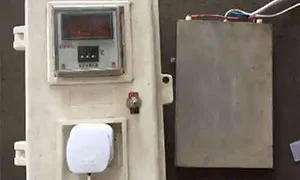
Vulcanizing machine

The following is the repair process

Marine Buoyancy Pontoon

After all damaged areas marked with repair symbols have been repaired, inflate the airbag and perform a final inspection. Ensure that no damage has been missed and that the airbag maintains the required pressure and airtightness. The repair work is then complete.

Hot Tags: Marine Buoyancy Pontoon Manufacturer, Floating Pontoon Supplier, Custom Marine Pontoons Wholesale
Send Inquiry
Contact Info
  • Address

    No. 60, Kongquehe Fourth Road, Clothing Industrial Park, Jimo District, Qingdao City, Shandong Province, China

Custom Rubber Solutions Await! Get a Factory-Direct Quote in 24 Hours
As a Top 10 Rubber Manufacturer in China, Aorunda engineers precision solutions for naval, construction & marine industries. Submit specs now for:
✅ Expert technical consultation
✅ Competitive OEM/ODM pricing
✅ Fast sampling & global shipping
X
We use cookies to offer you a better browsing experience, analyze site traffic and personalize content. By using this site, you agree to our use of cookies.Privacy Policy
RejectAccept